Can Games Disturb Your Social Biases Without Disturbing You?
Card games are more often associated with family-gatherings or leisurely afternoons than with realizing social change. However, one group of game designers is creating games with an aim to do just that.
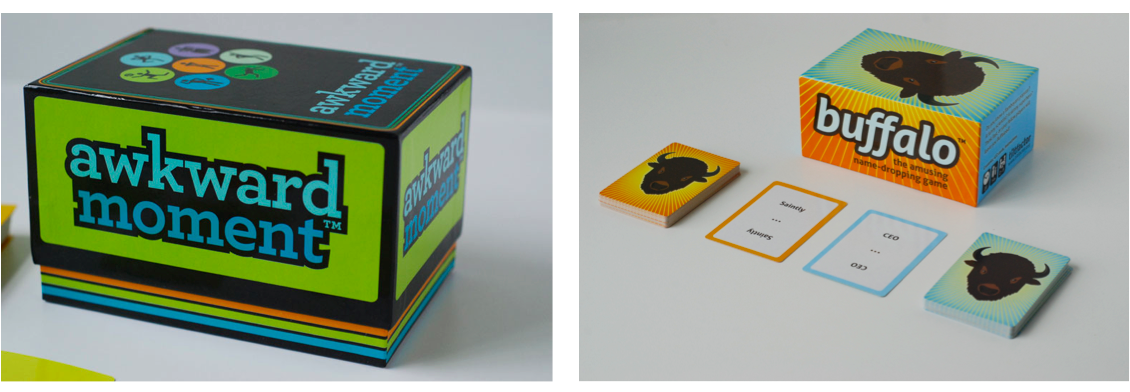 Tiltfactor Lab, a Dartmouth College research laboratory with Sherman Fairchild Distinguished Professor Mary Flanagan at the helm, is dedicated to “creating games for social change.” They designed and produce Buffalo—described by Amazon reviewers as an “extremely simple,” “adaptable” party game—and Awkward Moment—and is “an interesting, family-friendly card game that is worthy of your attention” and “makes you laugh”— provide more than just endless fun at parties. According to a paper to be printed in CyberPsychology’s upcoming issue devoted to the prosocial effects of games, Buffalo and Awkward Moment are also games with a proven purpose. These games have been shown to change players’ implicit biases without them ever knowing!





 Tale of Tales

 In
In  This summer, I’m working with Matt MacLaurin at Microsoft Research on Kodu Game Lab. For those of you who aren’t familiar, Kodu is an environment for people with no programming experience to quickly create games. Its visual programming language is designed to be intuitively understandable and its library of characters and objects facilitate rapid game development. If you’re interested in checking it out yourself, it’s currently available for the very reasonable price of $5 through X-Box Live Arcade.